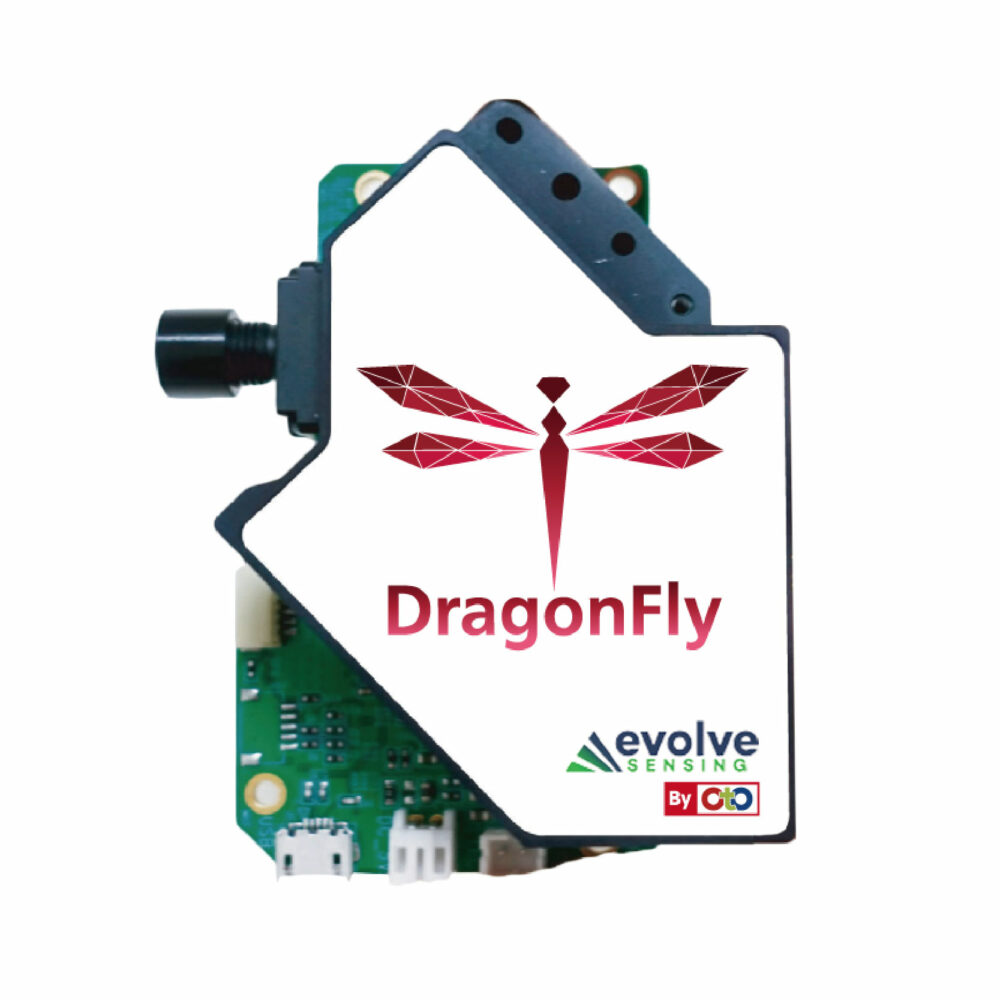
DragonFly NIR Spectrometer
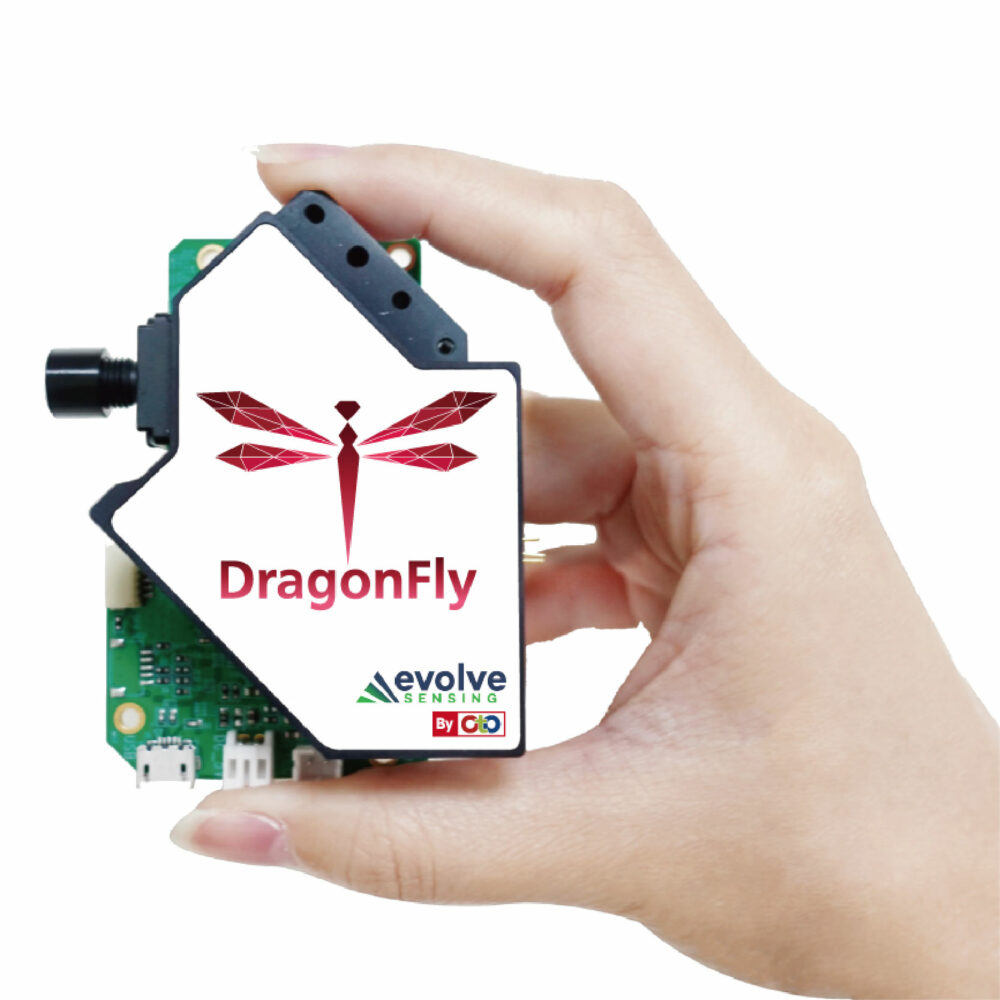
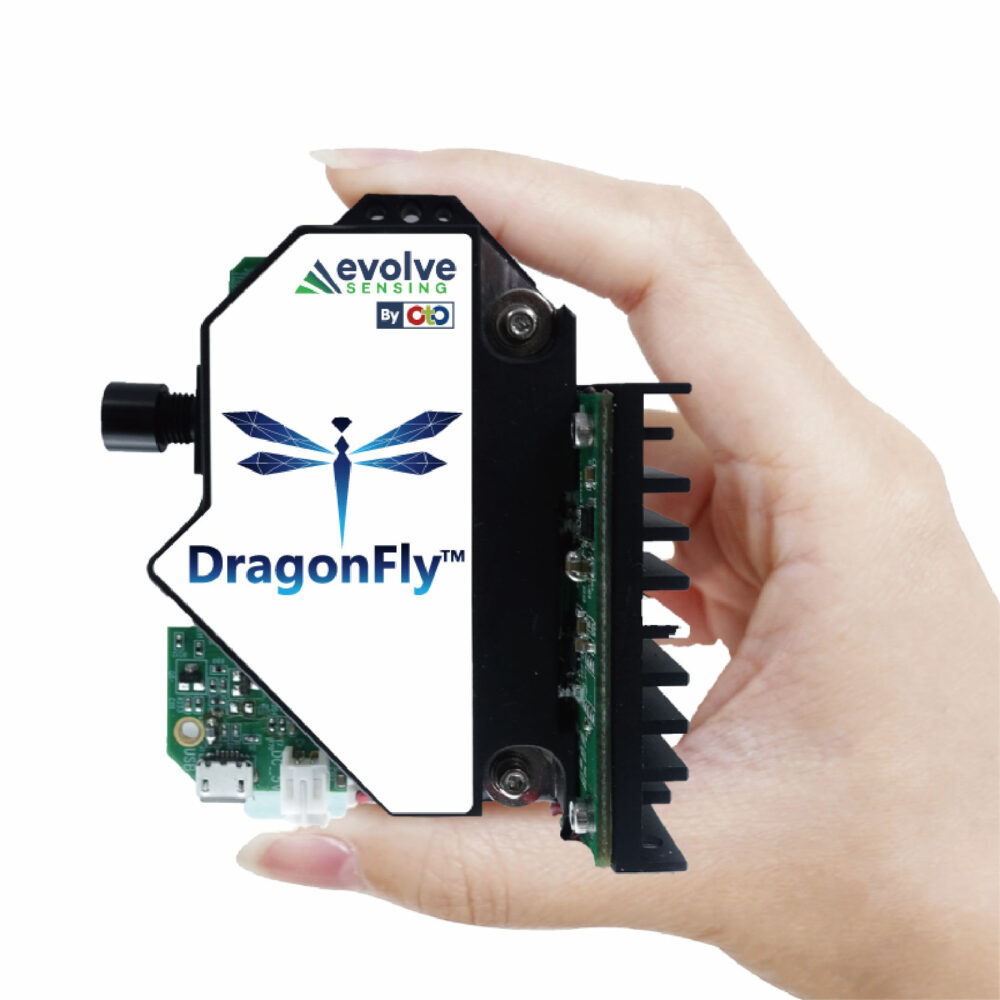
The DragonFly (DF) Series spectrometers feature advanced digital light processing (DLP) technology, utilizing a programmable digital micro-mirror device (DMD) chip paired with a high-sensitivity Hamamatsu G12180 series 1 mm InGaAs photodiode.
Description
The DragonFly (DF) Series spectrometers feature advanced digital light processing (DLP) technology, utilizing a programmable digital micro-mirror device (DMD) chip paired with a high-sensitivity Hamamatsu G12180 series 1 mm InGaAs photodiode.
The Hadamard scan mode enhances signal-to-noise ratio by up to 2–7× compared to standard column scanning. A 32-bit ARM Cortex-M4F RISC microcontroller provides fast processing and precise system control.
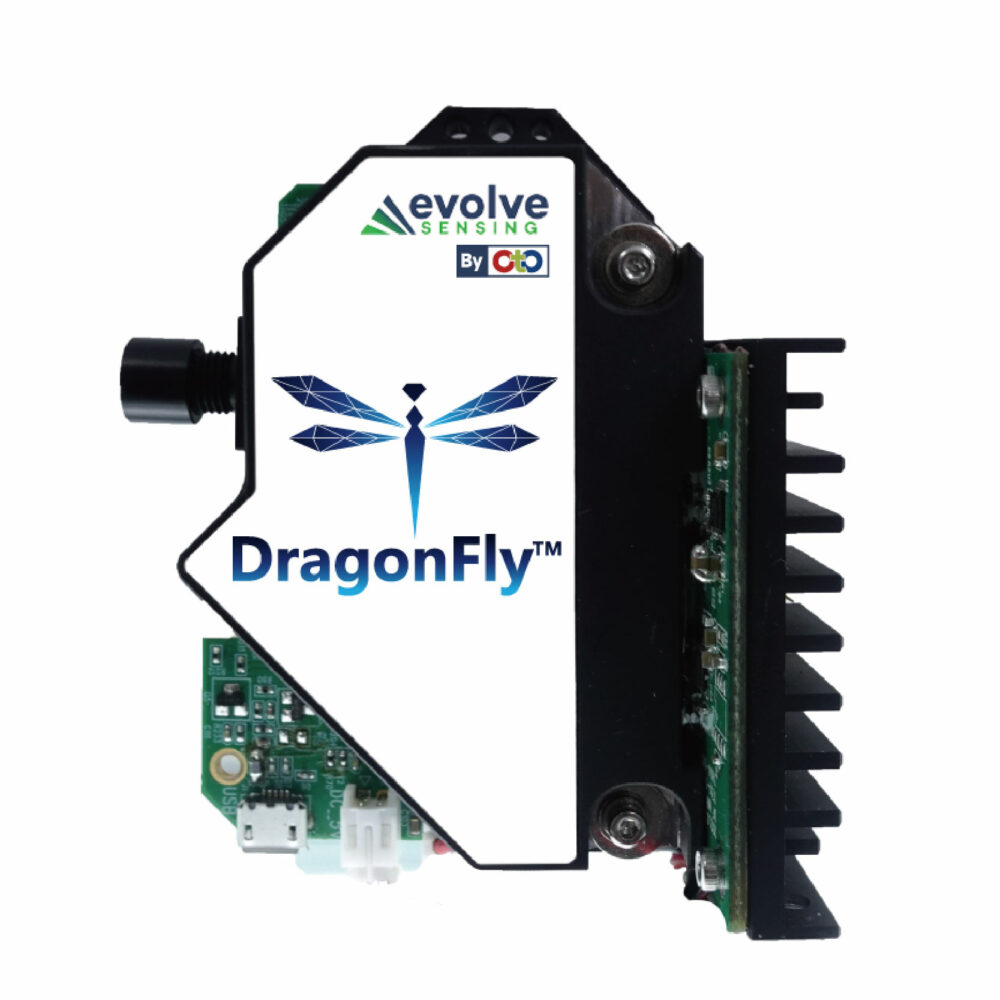
Powered via USB or UART, the DF Series offers models with optional TEC cooling, exposed circuit boards, or protective housings for flexible OEM and laboratory integration. Covering 900–2280 nm, the DragonFly Series delivers exceptional performance for demanding near-infrared applications.
Applications
- NIR spectroscopy and reflectance analysis
- Grain, fabric, and material identification
- Pharmaceutical, food, and polymer analysis
- Rapid absorbance and process monitoring
- Optical metrology and fiber characterization
- Environmental and agricultural analysis
- Scientific and industrial NIR sensing
- OEM and embedded system integration
Models and Wavelength Ranges
- DF1514: 900–1700 nm
- DF1914: 1250–2050 nm
- DF1924: 1340–2280 nm
- DF1934: 1340–2280 nm
Main Features
- Advanced digital light processing (DLP) technology with programmable digital micro-mirror device (DMD) chip for flexible, high-efficiency scanning
- Hamamatsu G12180 series 1 mm InGaAs photodiode for superior light detection and low noise
- Hadamard scan mode for enhanced signal-to-noise ratio (2–7× higher than column mode)
- Multiple scan modes: Column, Hadamard, and Slew (Col + Had)
- Fast minimum exposure time: 0.635 ms
- Resolution: 10–13 nm (average, model-dependent)
- Wavelength accuracy: ± 1 nm
- Thermal stability: < 0.08 nm / °C
- Low stray light: < 0.2 %
- TEC-cooled models (DF1914 / DF1924 / DF1934) maintain sensor temperature near –20 °C
- 32-bit ARM Cortex-M4F RISC microcontroller for fast processing and precision control
- Micro USB and UART interfaces, with LED indicators (green = power, red = scanning)
- SMA905 fiber optic interface (Ø 3.18 mm ferrule)
- Compact, lightweight design with optional protective casing for OEM and system integration
Specifications
Technical Details
- Sensor Type: 1 mm InGaAs PIN photodiode (Hamamatsu G12180 series)
- Optical System: Programmable DLP DMD (854 × 480 micro-mirrors)
- Scan Modes: Column / Hadamard / Slew (Col + Had)
- Slit Width: 25 µm
- SNR: 7000 (all models)
- Resolution (avg.): 10–13 nm
- Wavelength Accuracy: ± 1 nm
- Thermal Stability: < 0.08 nm / °C
- Stray Light: < 0.2 %
- Minimum Exposure Time: 0.635 ms
- Power Consumption: Idle < 0.8 W; Measuring < 1.4 W; Cooling < 1.0 W
- Controller: 32-bit ARM Cortex-M4F RISC microcontroller
- Interfaces: Micro USB 2.0 and UART (GPIO) with LED status indicators
- Fiber Input: SMA905 (Ø 3.18 ± 0.005 mm ferrule)
- Cooling: 2-stage TEC (DF1914 / 1924 / 1934 models)
- Environmental: Operating 0 – 40 °C; Storage –30 – 70 °C; Humidity 0 – 85 % RH
- Power Supply: 5 V DC @ 300 mA (typ.), 500 mA max with TEC cooling
Dimensions
- DF1514: 71.5 (L) × 57 (W) × 25 (H) mm
- DF1914 / DF1924 / DF1934: 76.7 (L) × 60 (W) × 40 (H) mm (including PCB)
Power Requirements
- Power via Micro USB DC 5V @300 mA (typ.), 500 mA max with TEC cooling
Documentation
Download / View Documentation
 Loading...

 Reload document
  Open in new tab
 Request Quote
Request a quote
Related products
-
Sale
Atto³ Handheld Spectrometer; Fluorescence
Original price was: €2.500,00.€750,00Current price is: €750,00.