
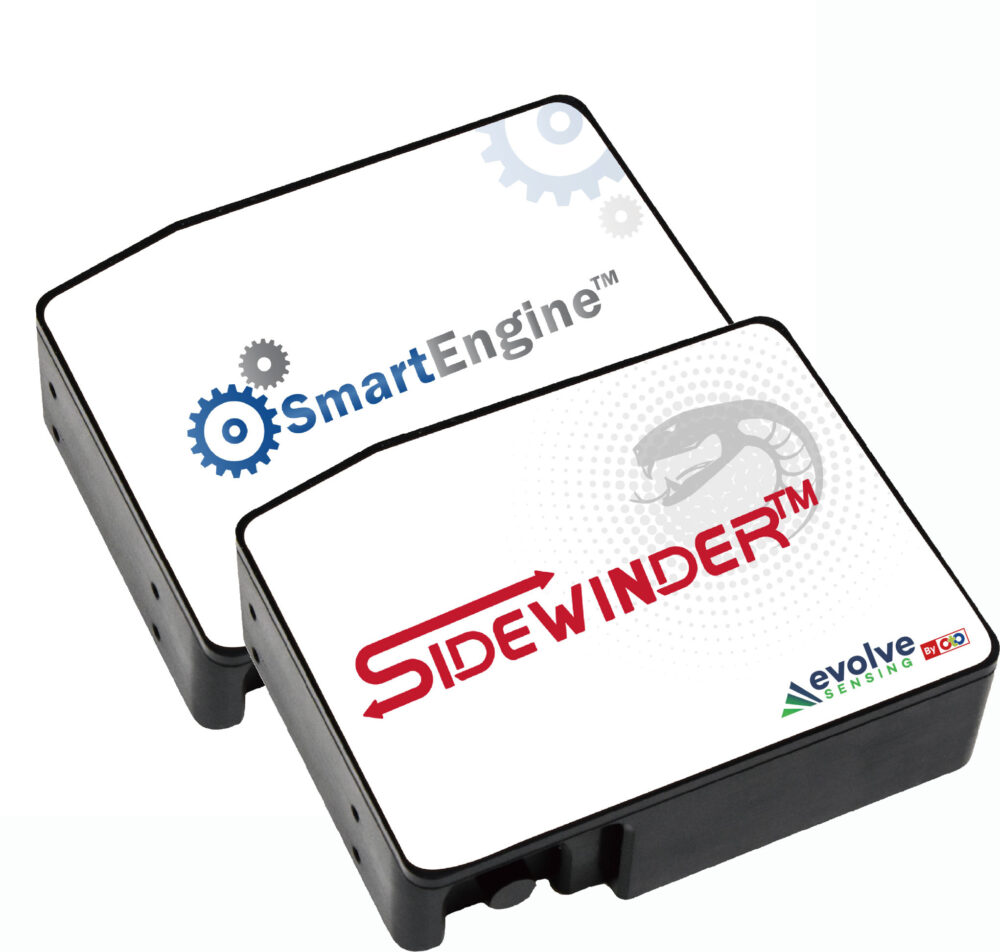
Dual Spectrometer extended range systems
The Dual Spectrometer (DS) Series integrates two spectrometers into a single compact system, enabling continuous coverage from UV to NIR (180–1700 nm). Using a Y-splitter fiber and robust Czerny-Turner optical design, the DS Series delivers high resolution, low stray light, and fast spectral response across a broad wavelength range. Its modular structure allows pairing of UV-VIS or VIS detectors with NIR detectors with a common trigger, offering flexible configurations tailored to diverse research and industrial needs.
Description
The Dual Spectrometer (DS) Series integrates two spectrometers into a single compact system, enabling continuous coverage from UV to NIR (180–1700 nm). Using a Y-splitter fiber and robust Czerny-Turner optical design, the DS Series delivers high resolution, low stray light, and fast spectral response across a broad wavelength range. Its modular structure allows pairing of UV-VIS or VIS detectors with NIR detectors with a common trigger, offering flexible configurations tailored to diverse research and industrial needs.
Series Concept
- Dual Engine Design: Combines one UV-VIS/VIS spectrometer (SE/EE models) with one NIR spectrometer (SW models). The system has a single trigger.
- Extended Spectral Coverage: Up to 180–1700 nm with seamless overlap between VIS and NIR channels.
- Flexible Pairing: Users can choose combinations (e.g., DS2686 = EE2060 + SW2860).
Models and Configurations
- UV-VIS Options (SE/EE Series): 180–1100 nm (CCD/CMOS, optional TE-cooled back-thinned CCD)
- NIR Options (SW Series): 900–1700 nm (InGaAs, optional TE cooling)
- Dual Combinations: Configurable pairing of one UV-VIS and one NIR model
Main Features
- Dual spectrometer integration with Y-splitter fiber
- Wide wavelength coverage: 180–1700 nm
- High sensitivity sensors: CCD, CMOS, InGaAs with TE-cooled options
- Optical resolution from 0.2 to 10.5 nm (depending on sensor/slit)
- Integration times: 0.2 ms – 65 s (UV-VIS); 50 µs – 15 s (NIR)
- USB 2.0 high-speed (480 Mbps), PC-controlled with SDK support
- Up to 5000 spectra buffering with precise multiple exposures
- Flash ROM storage for wavelength, linearity, and intensity calibration
- 6 programmable digital I/Os, external trigger, UART, lamp control
- Rugged, compact design with high stability against vibration and temperature change
Specifications
Technical Details
- Optical System: Czerny-Turner with 2nd/3rd order rejection
- Gratings: 15 options for UV–VIS; 2 options for NIR
- Slit Options: 10, 25, 50, 100, 200, 300 µm (UV-VIS); 10–200 µm (NIR)
- A/D Conversion: 16-bit, 15 MHz
- Fiber Interface: SMA905 (IEC 874-2 standard, ferrule <9.812 mm)
- Calibration: Wavelength, linearity, and intensity correction coefficients stored in Flash ROM
- Environmental: 0–50 °C operation; -30–70 °C storage; 0–90% RH non-condensing
Dimensions
- Standard DS: 180 (L) × 175 (W) × 60.7 (H) mm
- TEC versions: slightly larger due to cooling assembly
Power Requirements
- USB-powered: ~300 mA @ +5 VDC
- TEC Power: 500 mA @ +5 VDC (per spectrometer if TEC option selected)
- Supply voltage: 4.75–5.25 V


