Selecting the Right 785 nm Raman Spectrometer for Your Application
Selecting the Right 785 nm Raman Spectrometer for Your Application
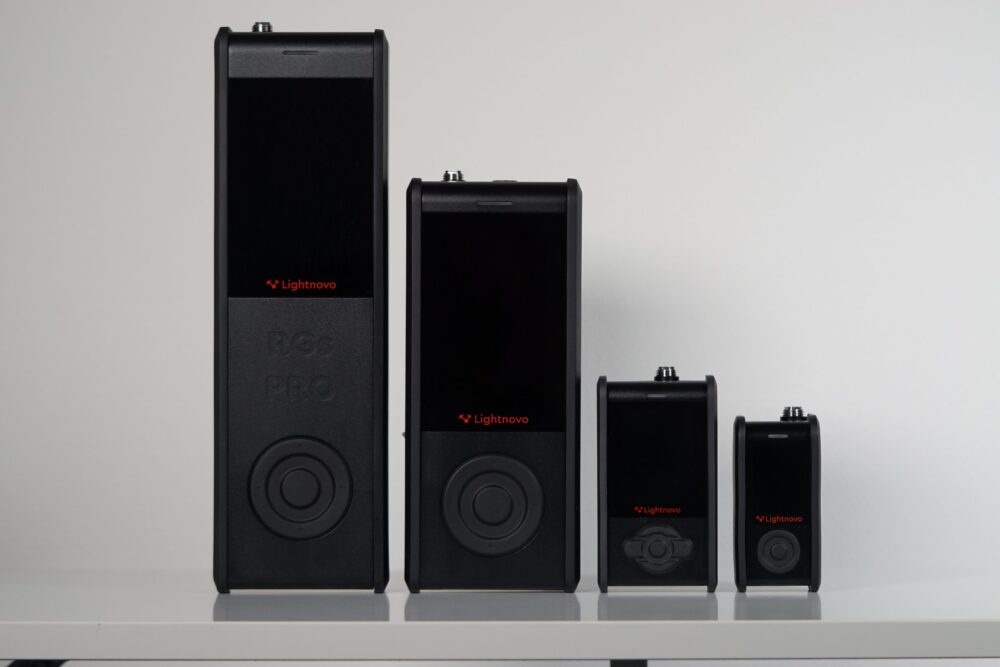
Choosing the right Raman spectrometer has a direct impact on data quality, insight, and application relevance. To support informed instrument selection, a new technical note compares three 785 nm Raman systems—miniRaman, RG, and RG Pro—tested under identical measurement conditions.
What the comparison covers
The study highlights how key performance parameters influence real-world Raman analysis, including:
- The effect of spectral resolution on peak discrimination
- When low-frequency Raman access becomes essential
- The importance of high-frequency spectral range for organic materials
- How system capabilities align with specific application requirements
Key findings at a glance
The comparison reveals clear performance distinctions between the three systems:
- RG and RG Pro provide approximately twice the spectral resolution of miniRaman
- RG Pro enables low-frequency Raman measurements down to 25 cm⁻¹, opening access to lattice and intermolecular modes
- miniRaman extends to the high-frequency region up to 3100 cm⁻¹, making it well suited for organic and molecular analysis
Performance on real samples
All systems were evaluated using representative materials:
- Silicon (520.7 cm⁻¹) was accurately measured by all instruments, confirming excellent stability and wavelength calibration
- Acetonitrile (2253 cm⁻¹) was clearly resolved by miniRaman and RG, while lying outside the spectral range of RG Pro
- Paracetamol measurements show that all systems resolve the fingerprint region, with RG Pro providing additional low-frequency structural information
Application-driven instrument choice
The results confirm that selecting a Raman spectrometer should be guided by application requirements, not specifications alone. Resolution, spectral range, and low-frequency access each play a decisive role depending on the materials and information of interest.
Whether applied in pharmaceutical analysis, materials science, defense, or academic research, this comparison offers practical guidance to identify the most suitable system.
Read the full technical comparison in the detailed technical note.